Your kitchen cabinets have seen better days. The finish is worn, the color feels dated, and every time you walk into the room, you wonder if it’s finally time for a change. If you’ve been searching for professional cabinet painters or getting quotes from kitchen remodelers, you’ve probably asked yourself the same question thousands of homeowners ask every year: Should I paint or replace my cabinets? The answer depends on your budget, your timeline, and the current condition of your cabinetry—but for most homeowners, the smart money is on painting.
Key Takeaways:
- Cabinet painting costs 50-70% less than full cabinet replacement
- A professional paint job can be completed in 3-5 days, while replacement projects often take 4-8 weeks
- Painted cabinets can last 8-15 years with proper care and maintenance
- Replacement makes sense only when cabinet boxes are structurally damaged, or you’re changing the entire kitchen layout
- Quality cabinet painting increases home value and delivers a strong return on investment
The Real Cost Difference Between Painting and Replacing Cabinets
Let’s talk numbers, because this is where the decision becomes clear for most homeowners.
The average cost to replace kitchen cabinets in a standard-sized kitchen runs between $12,000 and $30,000. That price includes materials, labor, installation, and often doesn’t account for the additional work that comes with replacement—new countertops, plumbing adjustments, electrical modifications, and patching walls where old cabinets left damage behind.
Cabinet painting, on the other hand, typically costs between $3,000 and $7,000 for the same-sized kitchen. That’s a savings of $9,000 to $23,000 that stays in your pocket.
Some homeowners look at those numbers and think, “But new cabinets will last longer, right?” Not necessarily. Today’s stock cabinets from big box stores are often made with particleboard and thin veneers. They look pretty in the showroom, but they don’t hold up the way cabinets built 20 or 30 years ago do. Many older cabinets were constructed with solid wood and quality joinery—built to last generations, not just a few years.
When Cabinet Painting Makes the Most Sense
Painting your cabinets is the right choice in most situations. Here’s when it makes particular sense:
Your cabinet boxes are solid. Open a cabinet door and look at the box itself. Is it sturdy? Do the shelves hold weight without sagging? Are the corners still square and tight? If the structure is sound, there’s no practical reason to tear it out.
You like your current layout. If your kitchen works well and you’re not looking to reconfigure where things are, painting lets you keep what works while refreshing the appearance.
You want results fast. Cabinet replacement projects involve ordering, shipping delays, demolition, installation, and often unexpected discoveries that add time to the project. Professional cabinet painting takes days, not months.
You’re preparing to sell your home. Real estate agents consistently report that updated kitchens help homes sell faster. A fresh cabinet paint job delivers that updated look without the massive investment of a full remodel. Buyers see a move-in-ready kitchen; you keep more equity in your pocket.
You care about sustainability. Sending your old cabinets to a landfill when they’re perfectly functional doesn’t make environmental sense. Painting extends their life by a decade or more.
When Replacement Is the Better Option
Painting isn’t always the answer. Here are situations where replacement makes more sense:
The cabinet boxes are falling apart. If the structural integrity is compromised—warped frames, water damage that’s caused swelling or delamination, or particleboard that’s crumbling—paint won’t fix those problems.
You’re doing a complete kitchen reconfiguration. When you’re moving appliances, changing the footprint, or opening up walls, new cabinets designed for the new layout make more sense than trying to retrofit old ones.
The cabinet style is extremely outdated and difficult to modernize. Some 1970s and 1980s cabinet designs feature heavy ornate details, arched cathedral doors, or other stylistic elements that paint alone can’t update. If the shape and style of the doors themselves are the problem, new cabinet doors or full replacement may be warranted.
You want a dramatically different storage configuration. If you need more drawers, pull-out organizers built into the cabinet structure, or specialized storage that your current cabinets can’t accommodate, replacement gives you that flexibility.
What Professional Cabinet Painting Actually Involves
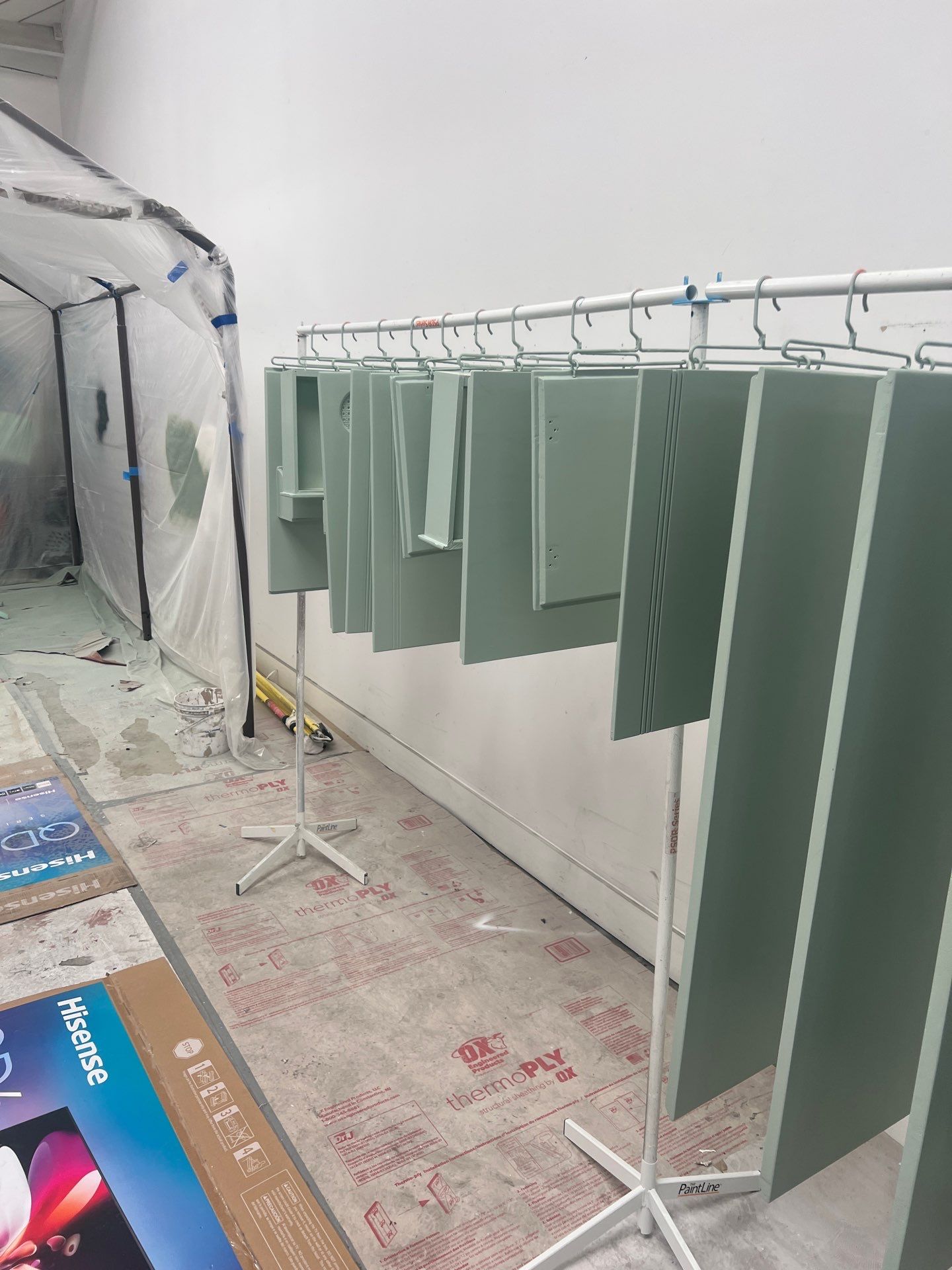
Many homeowners don’t realize how involved a proper cabinet painting job is. This isn’t a weekend DIY project with a brush and a can of paint from the hardware store. Here’s what a quality cabinet painting project includes:
Thorough preparation. Doors and drawers are removed and labeled. Hardware is taken off. Every surface is cleaned to remove grease, grime, and residue that’s accumulated over years of cooking.
Proper repair work. Dings, scratches, and minor damage get filled and sanded smooth. Any areas with peeling finish are addressed before new paint goes on.
Professional-grade primers. The primer is just as important as the paint. Bonding primers designed specifically for cabinetry create a foundation that helps the topcoat adhere properly and last for years.
High-quality paints and application methods. Professional painters use cabinet-specific paints that cure to a hard, durable finish. Spraying—when done correctly—delivers a smooth, factory-like appearance that brushes and rollers can’t match.
Multiple coats with proper cure time. Rushing a cabinet job leads to failure. Each coat needs adequate time to cure before the next is applied. Cutting corners here results in chipping, peeling, and fingerprints that won’t wipe away.
Careful reinstallation. Once everything is cured, doors and drawers are rehung, hardware is installed, and adjustments are made so everything opens, closes, and aligns properly.
This process takes time and skill. It’s one of the reasons the gap between professional results and DIY attempts is so wide.

The DIY Temptation and Why It Usually Disappoints
Painting your own cabinets seems like a great way to save money. Online tutorials make it look straightforward. Buy some paint, rent a sprayer, and you’ll have new-looking cabinets by Monday, right?
The reality is different. Cabinet painting has a steep learning curve, and the consequences of mistakes are highly visible. Cabinets are the focal point of your kitchen. Every drip, every brush stroke, every bit of dust that lands in wet paint shows.
Common DIY cabinet painting problems include:
- Paint that chips or peels within months because the surfaces weren’t properly prepared or primed
- Visible brush marks and roller texture instead of a smooth finish
- Doors that stick shut because paint was applied too thick or didn’t cure long enough
- Color inconsistency between doors, drawers, and face frames
- Finishing a project that takes far longer than expected—weekends turn into weeks
Homeowners who attempt DIY cabinet painting often end up calling professionals afterward to fix the results. In some cases, the remediation costs more than hiring professionals from the start would have.
How Long Will Painted Cabinets Last?
Professionally painted cabinets typically last 8-15 years before they need attention. Several factors affect longevity:
Quality of preparation and materials. Proper prep and professional-grade products dramatically extend the life of a paint job.
Kitchen conditions. Cabinets near the stove and sink see more heat, moisture, and grease. These areas may show wear sooner than other parts of the kitchen.
How the cabinets are used. Gentle use extends the life of any finish. Slamming doors and yanking drawers takes a toll over time.
Cleaning habits. Wiping cabinets with a damp cloth is fine. Using abrasive cleaners or harsh chemicals will degrade the finish faster.
When the painted finish eventually does wear, cabinets can be repainted again—extending their useful life even further.
Making Your Decision
Ask yourself these questions:
- Are my cabinet boxes structurally sound?
- Am I happy with my current kitchen layout?
- Do I need new cabinets in the next 30 days, or can I wait 4-8 weeks?
- Is spending an extra $10,000-$20,000 worth it for brand-new cabinetry?
- Are my cabinets solid wood or quality plywood, potentially better than today’s stock options?
If your cabinet boxes are solid and your layout works, painting is almost always the smarter investment. You’ll get a kitchen that looks refreshed and updated at a fraction of the replacement cost.
Ready to See What Your Cabinets Could Look Like?
Stop staring at those tired, outdated cabinets every morning. A professional cabinet painting job can give your kitchen the fresh, modern look you’ve been wanting—without the chaos, cost, and weeks-long disruption of a full replacement project.
Contact EAG Painting & Decoration Inc. today at 510-851-8860“>510-851-8860 to schedule your free cabinet painting consultation. We’ll assess your cabinets, answer your questions, and show you color options that will make you fall in love with your kitchen again.