You started your cabinet painting project with excitement. Maybe you hired a contractor who promised great results. Maybe you tackled it yourself after watching a few YouTube videos. Either way, something went wrong—and now you’re staring at peeling paint, visible brush strokes, or a finish that looks worse than when you started.
You’re not alone. Cabinet painting problems show up in kitchens across the country, and most homeowners have no idea what caused them or how to fix them.
Key Takeaways:
- Most cabinet paint failures come from skipping or rushing the prep work.
- The wrong primer or paint type will cause peeling and chipping within months.
- Professional-grade finishes require specific temperatures, humidity levels, and drying times.
- A bad paint job can often be fixed, but prevention is always cheaper than repair.
- Knowing what to look for helps you avoid hiring the wrong contractor.
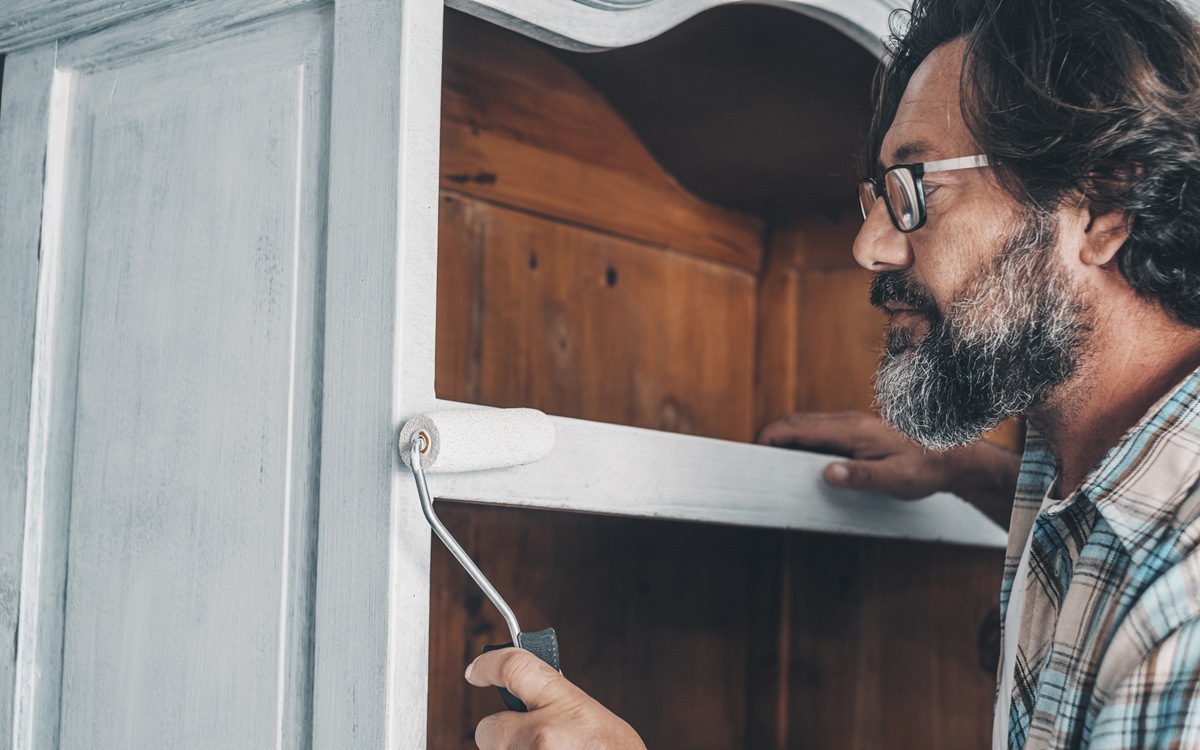
Why Do Painted Cabinets Fail?
Walk into any home improvement store and you’ll find dozens of paint options claiming to work on cabinets. The labels promise easy application and durable finishes. What they don’t tell you is that cabinet painting demands precision that wall painting simply doesn’t require.
Your kitchen cabinets take more abuse than almost any other painted surface in your home. They get touched hundreds of times per day. They deal with grease, steam, moisture, and temperature swings. They get bumped by pots, scraped by utensils, and cleaned with who-knows-what chemicals.
Paint that works fine on your bedroom walls will fail miserably on cabinet doors. And that’s just the beginning of where things can go wrong.
The Prep Work Problem
Here’s an uncomfortable truth: about 80% of cabinet painting problems trace back to what happened before the first drop of paint touched the surface.
Proper preparation takes time. A lot of time. We’re talking about cleaning with degreasers, sanding to create tooth for the primer, filling holes and dents, sanding again, cleaning again, and then—finally—priming.
When contractors rush through prep work (or skip steps entirely), the paint has nothing to grab onto. It might look fine for a few weeks. But then the peeling starts. The chipping begins. And you’re left wondering what went wrong.
Signs that prep work was skipped or rushed:
- Paint peeling in sheets rather than wearing gradually
- Visible grease or grime bleeding through the finish
- Paint that scratches off easily with a fingernail
- Bumps and debris trapped under the paint surface
- Old paint color showing through in thin spots
Primer Failures That Ruin Cabinets
Not all primers are created equal. The primer that works for drywall won’t bond properly to the slick factory finish on most cabinets. Many cabinets have a thermofoil or laminate surface that requires specialized bonding primers.
Using the wrong primer creates a weak foundation. The paint might adhere to the primer just fine. But if the primer won’t stick to the cabinet surface, the whole system fails.
Shellac-based primers work well for blocking stains and odors. Bonding primers grip slick surfaces. High-build primers fill grain and imperfections. Each serves a specific purpose, and using the wrong one causes problems that won’t show up until months later.
When the Wrong Paint Type Causes Problems
Oil-based paints dominated cabinet work for decades. They level beautifully, cure to a hard finish, and stand up to heavy use. But they also smell terrible, take forever to dry, yellow over time, and require mineral spirits for cleanup.
Water-based paints have improved dramatically. Modern acrylic-alkyd hybrids offer the durability of oil with the convenience of latex. Products like Sherwin-Williams Emerald Urethane and Benjamin Moore Advance give professional-quality results when applied correctly.
The problems start when someone uses the wrong product for the job. Standard wall paint—even high-quality wall paint—lacks the hardness and adhesion needed for cabinet surfaces. It stays soft, scratches easily, and shows wear within weeks of daily use.
Common paint selection mistakes:
- Using flat or eggshell finishes that show every fingerprint and won’t clean properly
- Choosing bargain paints that lack the resins needed for durability
- Applying latex paint over oil-based finishes without proper preparation
- Skipping the topcoat on water-based paints that need extra protection
Application Errors That Show Up Later
Even with perfect prep and the right products, poor application technique ruins cabinet finishes. The goal is a smooth, factory-like appearance without brush strokes, roller stipple, or orange peel texture.
Spraying delivers the smoothest finish but requires skill and equipment. Brushing works for detail areas but shows strokes if technique isn’t perfect. Rolling covers quickly but leaves texture that many homeowners find unacceptable on cabinets.
Application problems you might notice:
- Visible brush strokes in the finish
- Orange peel texture from improper spray technique
- Runs and drips on vertical surfaces
- Uneven sheen from inconsistent coverage
- Dust and debris embedded in the finish
Temperature and humidity matter more than most people realize. Paint applied in cold conditions won’t flow and level properly. High humidity slows drying and can cause the finish to stay tacky. Direct sunlight during application causes the surface to skin over before the paint underneath has leveled.
The Drying and Curing Confusion
Here’s something that trips up even experienced painters: there’s a difference between dry and cured.
Paint feels dry to the touch within hours. But the curing process—where the paint reaches its full hardness and durability—takes much longer. Water-based cabinet paints can take 30 days or more to fully cure. Oil-based products might need even longer.
During that curing period, the paint remains vulnerable. Closing doors too soon causes them to stick together. Setting items on shelves leaves impressions. Cleaning with anything other than a damp cloth can damage the finish.
Contractors who rush the reinstallation process set their customers up for problems. Cabinets need adequate time between coats. Doors and drawers need time to cure before handling. Shortcuts here lead to sticky spots, surface damage, and frustrated homeowners.
How to Spot a Bad Cabinet Paint Job
Maybe you’re reading this because your cabinets already show problems. Maybe you’re trying to evaluate work that was recently completed. Either way, knowing what to look for helps you understand what you’re dealing with.
Red flags in a recently painted cabinet:
- You can see the wood grain pattern clearly through the paint.
- The color looks different on doors versus frames versus drawer fronts.
- Paint has pooled in corners or collected in detailed areas.
- The finish feels rough or gritty instead of smooth.
- Hinges, handles, or other hardware show overspray or drips.
- Doors don’t close properly or stick when shut.
Some of these issues become more obvious over time. A paint job might look acceptable at first glance but reveal problems after a few weeks of normal use.

Can a Bad Paint Job Be Fixed?
The answer depends on what went wrong and how bad the damage is.
Surface issues like minor brush strokes or light orange peel can sometimes be sanded smooth and recoated. Peeling caused by poor adhesion usually requires stripping back to bare wood and starting over. Paint that’s incompatible with the underlying surface needs complete removal.
The honest truth: fixing a bad paint job often costs more than doing it right the first time. Stripping painted cabinets is messy, time-consuming work. And there’s always a risk of damaging the wood underneath.
If your cabinets were recently painted by a contractor, document the problems with photos and contact them about warranty coverage. Reputable painters stand behind their work and will address legitimate failures.
What Professional Cabinet Painting Actually Looks Like
When cabinet painting goes right, the results speak for themselves. Doors and drawers feel smooth to the touch. The finish is consistent across every surface. Colors match perfectly between pieces. There are no drips, runs, brush strokes, or imperfections.
Professional cabinet painters typically follow a process that includes:
- Removing all doors, drawers, and hardware
- Cleaning every surface with commercial degreasers
- Sanding or scuffing to create adhesion
- Filling holes, dents, and imperfections
- Applying bonding primer suited to the cabinet material
- Sanding the primer coat smooth
- Applying multiple thin coats of cabinet-grade paint
- Allowing proper cure time between coats
- Reinstalling hardware and hanging doors with careful alignment
This process takes days, not hours. Anyone promising to paint your cabinets in a single day is cutting corners somewhere.
Questions to Ask Before Hiring a Cabinet Painter
Protecting yourself starts with asking the right questions before any work begins.
Ask potential contractors:
- What specific products will you use for primer and paint?
- How many coats of primer and paint are included?
- Will you spray, brush, or roll the cabinets?
- How long will the project take from start to finish?
- What preparation steps are included in your process?
- How long should I wait before using my cabinets normally?
- What does your warranty cover and for how long?
Pay attention to how they answer. Professionals explain their process clearly and confidently. They can tell you exactly which products they use and why. They set realistic timelines and don’t promise overnight results.
Ready to Get Your Cabinets Done Right?
Cabinet painting problems are frustrating, but they’re also preventable. The difference between a finish that fails in months and one that lasts for years comes down to products, preparation, and process.
Whether you’re dealing with a failed paint job or planning a cabinet refresh, EAG Painting & Decoration Inc. is here to help. We’ve seen every cabinet painting problem in the book—and we know exactly how to avoid them.
Call 510-851-8860 today to schedule a consultation. We’ll assess your cabinets, explain our process in detail, and give you an honest quote for professional results that last.
Your kitchen deserves better than a paint job that falls apart. Let’s make sure your cabinets look beautiful for years to come.